Lights On, Stakes Up: How the Crowd Changes Everything About the Way You Play
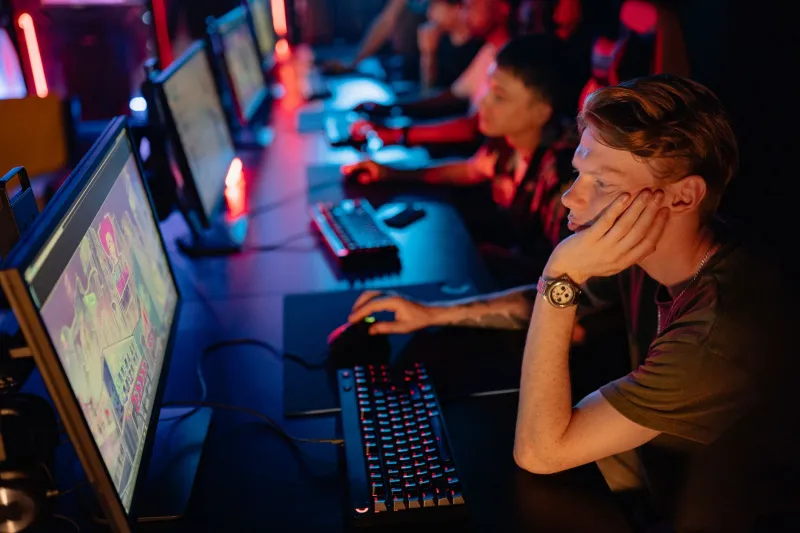
You've run this play a hundred times in practice. You know the math. You trust your read. Then someone pulls up a chair beside you, the chat lights up, and suddenly your hands feel like they belong to someone else.
Welcome to the arena effect — and if you've ever competed in a live tournament on SHBet Arena, you've already felt it, whether you had a name for it or not.
This isn't about nerves in the casual sense. It's a full-blown psychological shift that changes how you process information, manage risk, and execute decisions under pressure. And the players who learn to understand it? They're the ones still standing when the final round closes.
What Actually Happens to Your Brain When People Are Watching
Back in 1965, a psychologist named Robert Zajonc introduced a concept called social facilitation — the idea that the presence of others changes how we perform. For well-practiced tasks, an audience often makes us sharper. For tasks that require complex thinking or unfamiliar decisions, that same audience can tank our performance.
Betting in a live competitive environment hits both ends of that spectrum at the same time. You're leaning on practiced instincts while also navigating real-time variables — odds shifts, opponent behavior, bankroll management — that demand clear-headed analysis. The crowd doesn't just add pressure. It splits your attention.
Neuroscience backs this up. When humans perceive they're being evaluated, the amygdala — the brain's threat-detection center — activates. Cortisol and adrenaline flood the system. Reaction time speeds up, but higher-order thinking takes a hit. You might move faster, but you're also more likely to deviate from your strategy without realizing it.
In a solo session, you're operating on logic. In the arena, you're operating on logic and ego, and those two don't always agree.
The Invisible Audience Problem
Here's the part that surprises most players: you don't even need a live audience for the effect to kick in. Research on performance anxiety shows that the mere perception of being watched — even by strangers on a leaderboard or in a chat thread — triggers the same neurological response as a packed room.
On a platform like SHBet Arena, where tournament brackets are visible, results are posted in real time, and community engagement is part of the experience, that invisible audience is always present. Every move you make exists in a social context, even if no one's literally looking over your shoulder.
Experienced players talk about this all the time. "The first time I saw my username on a public leaderboard, I started playing differently," said one long-time competitive player who's been grinding tournaments for three years. "I wasn't making worse decisions exactly — I was making safer ones. I stopped taking the calculated risks that had been winning me money in private sessions."
That's the trap. The arena effect doesn't always make you reckless. Sometimes it makes you timid, and timid doesn't cash out either.
Two Ways Players Break Under Pressure (And One Way They Don't)
Pressure tends to crack players in one of two directions.
The first is overconfidence. The crowd energy, the competitive buzz, the feeling of being in it — all of that can inflate your sense of control. You start betting bigger than your bankroll strategy allows. You chase momentum instead of value. You confuse excitement for edge.
The second is paralysis. The fear of looking bad in front of others — or of losing publicly — makes you hesitate, second-guess, and ultimately play well below your actual level. You leave value on the table because the risk of a visible mistake feels worse than the cost of a missed opportunity.
The players who don't break? They've learned to treat the arena environment as a variable, not a wildcard. They account for it the same way they account for odds or opponent tendencies. They know the pressure is coming, so they've built systems that hold up when their emotions try to override their judgment.
Practical Techniques for Keeping Your Head When the Stakes Are High
This is where the rubber meets the road. Understanding the psychology is useful, but what actually works in the moment?
Pre-session anchoring. Before you enter a tournament, spend five minutes reviewing your strategy rules — not your goals, your rules. Max bet thresholds. When to walk away. Which game types you're targeting. Anchoring these in your working memory before the pressure hits gives your brain a framework to fall back on when instinct tries to take the wheel.
Process over outcome focus. Most performance anxiety is outcome-driven — you're worried about winning, losing, or how you look. Shifting your focus to process (Am I following my strategy? Am I making decisions for the right reasons?) takes the ego out of the equation. You can't control results. You can control execution.
The pause protocol. Competitive players who've mastered composure often describe a simple habit: before any significant decision, they take one deliberate breath and ask themselves a single question — Is this the play, or is this the pressure talking? It sounds almost too simple, but that half-second of intentional pause interrupts the amygdala's hijack and lets your prefrontal cortex back into the conversation.
Desensitization through exposure. The more you compete in live, public environments, the less novel the pressure feels. Start with smaller tournaments where the stakes are lower but the format is real. Build your competitive reps. The arena effect doesn't disappear with experience, but it becomes familiar — and familiar is manageable.
The Flip Side: Using the Crowd as Fuel
Not everything about the arena effect works against you. For players who've developed composure, that same energy — the leaderboard visibility, the community engagement, the competitive atmosphere — becomes a performance enhancer.
Zajonc's original research found that audiences improve performance on well-practiced tasks. If your core strategy is solid and you've logged real hours developing your game, the pressure of a live environment can sharpen your focus in ways a solo session never will. The crowd raises the stakes, and raised stakes demand your best.
Some players actively seek out competitive environments because they know they perform better when something real is on the line. They've done the internal work — they've faced the anxiety, built the systems, and come out the other side with a version of their game that's genuinely better under pressure than without it.
That's the goal. Not eliminating the arena effect, but turning it into an advantage.
Play Bold. Stay Grounded.
SHBet Arena is built for competition — real games, real stakes, real community. That environment is part of what makes it compelling. But it's also what makes self-awareness so critical.
The players who last aren't the ones who feel no pressure. They're the ones who feel it, recognize it for what it is, and keep making smart decisions anyway. They've figured out that the arena doesn't just test your strategy — it tests you.
Know the effect. Build for it. And when the lights come on, be ready.