Your Surroundings Are Costing You Money: The Hidden Edge of a Smarter Gaming Setup
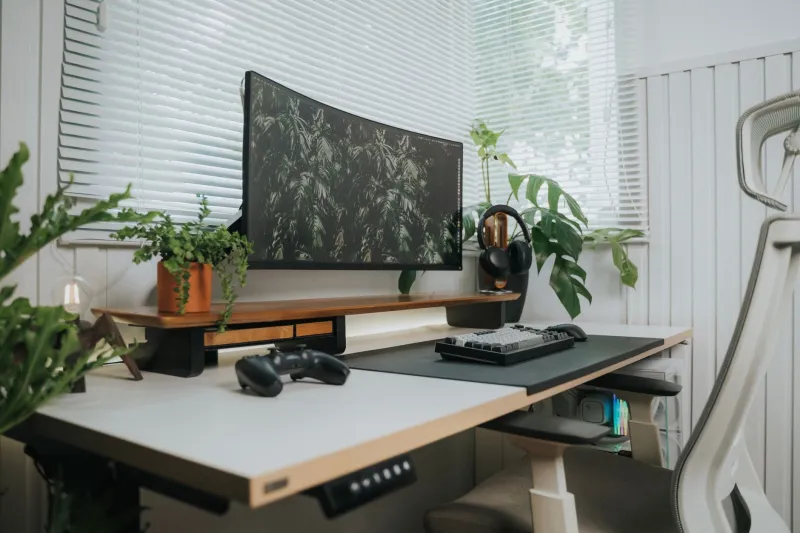
Here's something most players never want to admit: you could have the sharpest betting instincts in the room and still get outplayed — not by a better opponent, not by bad luck, but by the chair you're sitting in and the notifications blowing up your phone.
Sounds dramatic? It's not. The relationship between your physical environment and your decision-making quality is well-documented in cognitive science, and serious competitive players have been quietly exploiting it for years. While the average bettor is grinding strategy guides and memorizing odds tables, the top performers on platforms like SHBet Arena are obsessing over something most people overlook entirely: the setup.
Let's break down why your surroundings might be your biggest leak — and exactly what to do about it.
The Brain Under Pressure Needs the Right Conditions
Your brain isn't a machine that performs at a fixed rate regardless of external input. It's more like a high-performance engine that runs cleaner under certain conditions. Cognitive load — the mental effort required to process information and make decisions — spikes when your environment introduces friction. Noise, discomfort, visual clutter, interruptions: all of it quietly chips away at your ability to think clearly.
In a betting context, that matters enormously. The difference between a sharp read on a line and a hasty, emotional call often comes down to how much bandwidth your brain has available in that moment. If you're playing on a cramped couch with your TV blaring in the background and your phone buzzing every few minutes, you're operating at maybe 70% cognitive capacity. Maybe less.
Professional poker players figured this out decades ago. E-sports athletes have entire support teams dedicated to optimizing their performance environments. The same logic applies to serious sports bettors and competitive gaming players. Your setup isn't just a comfort preference — it's a performance variable.
The Phone Problem Is Worse Than You Think
Let's start with the most obvious culprit: your smartphone. If you're playing on desktop or a second device and your personal phone is sitting next to you, it is actively degrading your performance — even when you're not looking at it.
Research out of the University of Texas at Austin found that the mere presence of a smartphone on a desk reduces available cognitive capacity, even when the phone is face-down and silenced. Your brain knows it's there. It allocates a small but meaningful portion of attention to monitoring it. Over a long session, that adds up.
The fix is simple but feels counterintuitive: put the phone in another room during your session. If you're playing on mobile through the SHBet Arena app, disable all non-essential notifications before you start. You're there to play, not to be interrupted.
Lighting Isn't Just About Comfort
Most people set up their gaming space based on what feels comfortable in the moment, which usually means dim lighting or whatever the overhead fixture happens to offer. But lighting has a measurable effect on alertness and decision-making speed.
Blue-tinted, brighter light — the kind that mimics midday daylight — promotes alertness and faster cognitive processing. Warm, dim lighting does the opposite: it signals to your brain that it's time to wind down. If you're playing evening sessions in a dark room lit only by your screen, you're fighting your own biology.
A simple desk lamp with a daylight bulb positioned to reduce screen glare can meaningfully shift your alertness level over a two- or three-hour session. It's a five-dollar fix that most players will never bother making.
Temperature: The Overlooked Variable
Studies on workplace productivity consistently point to a narrow temperature band — roughly 70 to 77 degrees Fahrenheit — as the sweet spot for sustained cognitive performance. Too cold and your body diverts resources to staying warm. Too hot and your focus softens, your patience shortens, and your frustration threshold drops.
That last point is particularly relevant for betting. Heat has been shown to increase impulsive decision-making and reduce tolerance for ambiguity — two things that will absolutely wreck your bankroll if left unchecked. If you're playing in a stuffy apartment in July without AC, your tilt threshold is lower than you realize.
Control what you can. Keep the room cool and well-ventilated. It sounds almost too simple to be worth mentioning, but it's the kind of marginal gain that compounds across sessions.
Time of Day and Your Decision-Making Window
Not all hours are created equal. Your prefrontal cortex — the part of the brain responsible for rational decision-making, risk assessment, and impulse control — performs differently depending on where you are in your daily energy cycle.
For most people, peak cognitive performance lands in the late morning to early afternoon window, roughly 10 AM to 2 PM. Decision-making quality tends to dip in the early afternoon (the post-lunch slump is real), recovers slightly in the late afternoon, and then degrades progressively through the evening as mental fatigue accumulates.
This doesn't mean you can never play at night — plenty of people do their best work later in the day. But it does mean you should be honest with yourself about when you're actually sharp versus when you're just grinding out of habit or boredom. Playing on SHBet Arena at midnight after a long workday is a different cognitive experience than playing on a refreshed Saturday morning, and your results should reflect that difference.
Building Your Optimal Setup: A Practical Checklist
You don't need a custom gaming room or a four-monitor rig to optimize your environment. Small, deliberate changes add up fast. Here's what to prioritize:
Clear your physical space. A cluttered desk creates visual noise that increases cognitive load. Keep your playing area minimal — just what you need, nothing extra.
Manage audio intentionally. Total silence works for some players; ambient background sound (lo-fi music, white noise, a fan) works better for others. The key word is intentional. Whatever you choose, it should be consistent and non-distracting. Avoid TV or anything with dialogue — your brain will try to follow it.
Upgrade your seating. You don't need an expensive gaming chair. You need something that lets you sit upright comfortably for an extended period. Slouching restricts breathing and accelerates fatigue.
Hydrate and eat before you play. Dehydration — even mild dehydration — measurably impairs concentration and mood. Have water nearby. Don't play on an empty stomach or immediately after a heavy meal.
Set a defined session window. Knowing you have two hours to play creates a mental container that helps sustain focus. Open-ended sessions drift into fatigue without you noticing.
The Bigger Picture
Here's the mindset shift that ties all of this together: stop treating your environment as a passive backdrop and start treating it as an active part of your strategy. Every serious discipline — athletics, trading, competitive gaming — recognizes that performance is a function of preparation, and preparation includes your physical and psychological conditions.
On SHBet Arena, the competition is real and the stakes are real. You're making decisions under pressure, often quickly, with real consequences attached. Giving yourself the best possible conditions to think clearly isn't a luxury — it's the smartest bet you can make before a single game even starts.
Play bold. But play smart enough to set yourself up first.